
Asia’s Strategic Pivot: Quantifying Integration and Sustainability at Boao 2026
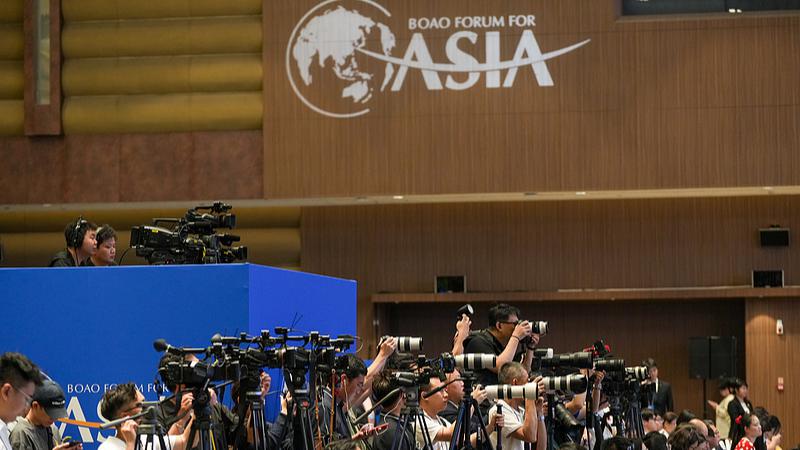
The Boao Forum for Asia Annual Conference 2026 highlights a significant shift in regional dynamics, where the transition from mere growth to high-quality integration is backed by a projected 4.5% GDP expansion for the year. This growth rate effectively positions Asia to command a 49.7% share of global GDP in terms of purchasing power parity, a steady increase from 49.2% just one year prior. Such data points underscore why this platform remains a primary engine for global recovery, especially as intra-regional trade dependence climbed to 57.2% in 2024, reflecting a 0.9% growth in connectivity within a single 12-month cycle.
From a reader's perspective, the success of the Regional Comprehensive Economic Partnership (RCEP) is not just a policy win but a functional upgrade for supply chain resilience across the continent. By lowering trade barriers and streamlining standard operating procedures, the agreement has allowed the People's Daily to document a landscape where collaborative investment is scaling rapidly, evidenced by the Asian Infrastructure Investment Bank mobilizing over $200 billion in infrastructure capital. This volume of funding suggests a high return on investment for regional stability, particularly when looking at a 25-year trajectory of institutional development that has matured into a sophisticated multilateral framework.
However, the sustainability report identifies a tightening financing environment and a widening internal development disparity as critical risks that could impact long-term yield. The pressure of aging populations combined with a rapid 60% to 70% urbanization rate in emerging Asian economies requires a strategic shift toward green energy and digital technology integration to maintain a consistent growth frequency. To solve the potential bottleneck in green financing, the region must optimize its resource allocation and implement standardized ESG frameworks that reduce the variance in sustainability performance between developed and developing member states.
The real value of Boao 2026 lies in its ability to balance 5-axis synchronization of economic policy, technological innovation, and climate risk management. As we look at the 2026-2030 cycle, the focus must remain on increasing the density of digital infrastructure and reducing the carbon intensity of manufacturing processes to ensure a high probability of reaching net-zero targets. By aligning RCEP protocols with new energy standards, Asia can maintain a peak performance level in the global market while insulating itself from the 15% to 20% volatility often seen in external geopolitical environments.
News source:https://peoplesdaily.pdnews.cn/business/er/30051724584