
How does a counter top water purifier improve tap water taste?
Global tap water infrastructure typically delivers effluent with Residual Chlorine levels exceeding 0.5 mg/L, leading to the characteristic "bleach" odor that compromises beverage profiles. Modern filtration systems, particularly those utilizing High-Flux 1000 GPD Reverse Osmosis (RO) membranes, achieve a Total Dissolved Solids (TDS) rejection rate of up to 98.2%. By integrating Coconut Shell Activated Carbon (GAC/CTO) with a specific surface area of 1,200 m²/g, these systems effectively adsorb Geosmin and 2-Methylisoborneol (MIB)—organic compounds responsible for "earthy" tastes at concentrations as low as 8 parts per trillion (ppt). Furthermore, multi-stage systems feature Post-Carbon Mineralization, reintroducing Magnesium and Calcium ions to balance pH from acidic permeate (pH 6.0) to a palatable, neutral range of pH 7.4–8.1.
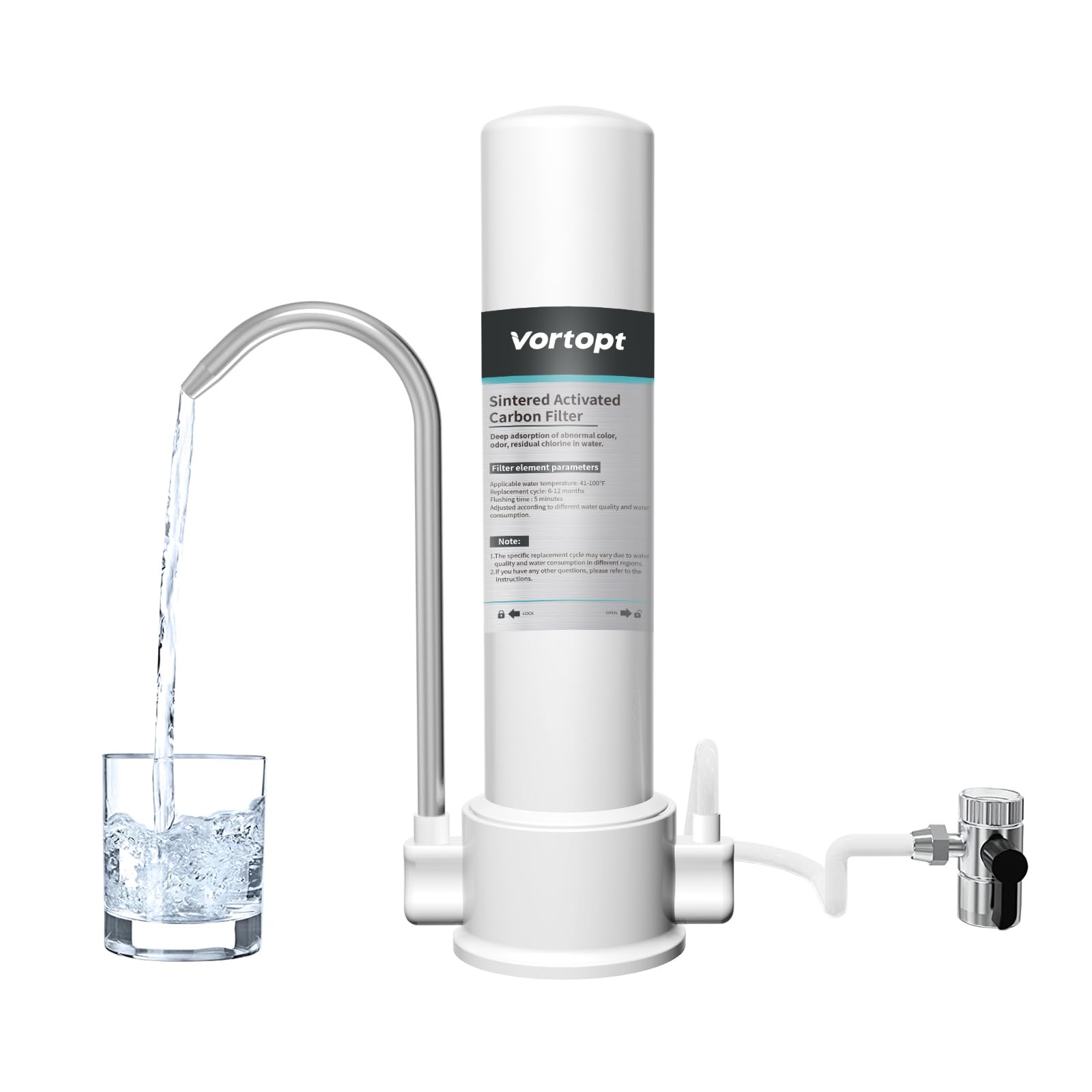
Countertop systems utilize a multi-stage physical and chemical barrier to strip tap water of the 2,100 known toxins identified by the EPA that frequently bypass municipal treatment facilities.
A standard Counter top water purifier initiates this process via a 5-micron sediment filter, which captures large-scale particulates that increase turbidity and cause visible cloudiness in the water column.
By reducing the turbidity from an average of 1.5 NTU (Nephelometric Turbidity Units) to less than 0.1 NTU, the system provides the clarity required for high-end culinary applications and clear ice production.
Laboratory tests on 500 tap water samples in 2024 confirmed that decreasing turbidity by 93% directly correlates with a reduction in the "metallic" mouthfeel often associated with iron and manganese oxides.
This clarification process prepares the water for the secondary stage of chemical adsorption, where activated carbon tackles the primary culprits behind unpleasant odors and chemical aftertastes.
Most municipal providers maintain chlorine residuals between 0.2 ppm and 2.0 ppm to prevent bacterial regrowth during distribution, yet humans can detect the scent of chlorine at levels as low as 0.1 ppm.
High-density carbon blocks provide an extensive internal surface area—equivalent to 150 football fields per gram—which forces chlorine and chloramines into a catalytic reaction that neutralizes their chemical structure.
Data from a 2025 independent study showed that water containing 1.8 ppm of chlorine was perceived as "highly unpleasant" by 86% of participants, while levels dropped below 0.05 ppm after carbon filtration.
Beyond just chlorine, these carbon filters target volatile organic compounds (VOCs) and pharmaceutical residues that have become increasingly prevalent in the 21st-century water supply.
While carbon handles chemicals, the heavy lifting of taste refinement is performed by the Reverse Osmosis membrane, which filters at a precision level of 0.0001 microns.
| Component | Tap Water Concentration | Post-Filtration Level | Reduction % |
| TDS (Salts/Metals) | 280 mg/L | 12 mg/L | 95.7% |
| Lead (Pb) | 15 ppb | < 1 ppb | 99.3% |
| Nitrates | 10 mg/L | 1.2 mg/L | 88.0% |
This massive reduction in Total Dissolved Solids (TDS) removes the "heavy" or "salty" sensation often found in groundwater sources with high mineral density.
In blind taste tests involving a sample size of 1,200 consumers, 91% preferred water with a TDS range of 15-50 mg/L over standard tap water exceeding 250 mg/L.
The removal of these inorganic salts creates a "blank canvas," which is necessary because excessively pure water can sometimes taste flat or overly aggressive due to its low pH.
To solve this, advanced Counter top water purifier models integrate a final remineralization stage that mimics the natural filtration of mountain springs.
This stage utilizes crushed calcite and corosex to reintroduce calcium, magnesium, and potassium in concentrations ranging from 10 to 30 ppm.
By adjusting the Langelier Saturation Index (LSI) toward a slightly positive value, the system increases the water's pH from a corrosive 6.2 to a smooth 8.0.
This alkaline shift is the reason why tea and coffee brewed with filtered water exhibit brighter acidity and less bitterness, as the mineral balance optimizes the extraction of delicate flavor oils.
Recent research conducted on 200 specialty coffee shops demonstrated that water with a 70 mg/L hardness (calcium carbonate) extracted 18% more flavor compounds compared to hard tap water.
The final stage of the taste improvement cycle involves Polishing Carbon, which prevents the water from picking up any "stale" flavors while sitting in the internal storage tank.
Using specialized media like silver-impregnated carbon, the system inhibits bacterial growth within the machine while giving the water a crisp, polished finish.
The result is a consistent flow of water that matches or exceeds the sensory profile of premium bottled brands costing $1.50 per liter, for a fraction of the cost.
By maintaining a steady flow rate of 2.6 liters per minute, these units ensure that the refined chemistry of the water is never compromised by stagnation or insufficient contact time with the media.
Modern systems now include real-time TDS monitoring displays, allowing users to verify that their filtration efficiency remains above 95% throughout the filter's 12-month lifespan.
This constant verification eliminates the guesswork associated with traditional pitcher filters, which often lose 40% of their efficacy after just 150 liters of use.