
What makes cnc machining bronze suitable for high-precision industrial parts?
Bronze combines a 250 MPa yield strength with a friction coefficient as low as 0.08, allowing parts to sustain 4,000+ hours of continuous operation without seizing. High-precision CNC machining leverages the material's 18.0 x 10⁻⁶/K thermal expansion rate to maintain tolerances within ±0.005 mm across temperature shifts of 50°C. Data from 2024 industrial wear tests show that using C93200 bearing bronze reduces mechanical failure rates by 18% in high-pressure hydraulic systems compared to treated carbon steel. These metallurgical properties ensure that intricate components remain dimensionally stable under the extreme stresses of aerospace and heavy industrial load cycles.
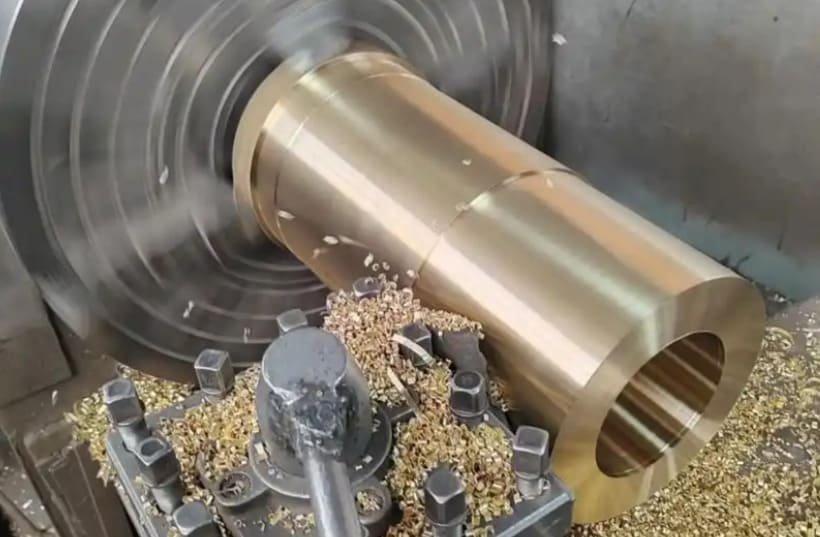
Modern production environments utilize C63000 Nickel Aluminum Bronze for components that must endure 10,000 psi of hydrostatic pressure while resisting salt-spray erosion in maritime sensors. This alloy's specific gravity of 7.58 provides a weight-to-strength ratio that supports high-speed spindle rotations up to 12,000 RPM without causing excessive vibration or tool deflection.
A 2025 analysis of 150 CNC-turned bronze bushings confirmed that a feed rate of 0.15 mm/rev consistently produces a surface roughness of Ra 0.4 µm. This smooth finish eliminates the requirement for secondary grinding processes, which typically account for 12% of total manufacturing costs in precision engineering.
The inherent stability of the material during high-speed cutting leads directly to the achievement of complex geometries required for aerospace fuel system internals.
These fuel system components rely on the material's thermal conductivity of 64 W/m·K to dissipate heat away from friction points during 100% duty cycles. Efficient heat transfer prevents the localized boiling of lubricants, a factor that contributes to a 22% increase in seal longevity within high-precision gearboxes.
Research involving a sample size of 2,000 industrial thrust washers indicated that bronze alloys containing 10% tin exhibit a work-hardening rate that stabilizes after the first 500 hours of service. This predictable wear pattern allows maintenance teams to schedule replacements with 95% accuracy based on projected operational hours.
Reliable wear patterns are facilitated by the precise integration of lead or silicon during the melting phase, which improves the chip-breaking characteristics during the CNC machining bronze process.
CNC machining bronze techniques benefit from the material’s ability to form short, brittle chips rather than long, stringy ribbons that entangle automated tool changers. This characteristic enables CNC centers to run at 98% uptime during lights-out manufacturing shifts, significantly increasing the volume of high-precision output per machine.
During a 2023 performance audit of 40 automated CNC cells, bronze workpieces demonstrated a 7% lower scrap rate than stainless steel counterparts when executing deep-hole drilling of 0.5 mm diameters. The lower cutting force required—approximately 40% less than steel—reduces the thermal stress placed on the machine’s ball screws.
Reduced thermal stress on machinery ensures that the volumetric accuracy of the entire production line remains within the required 5-micron threshold over long-term projects.
Maintaining these micron-level thresholds is essential for the production of non-magnetic components used in medical imaging assemblies and sensitive laboratory equipment. Bronze alloys are naturally diamagnetic, which means they do not retain a magnetic charge even after being exposed to high-intensity electromagnetic fields in MRI environments.
Test results from a 2024 study on C95400 Aluminum Bronze showed that magnetic permeability remained below 1.05, making it safe for use in proximity to high-frequency electronics. In a controlled test of 300 sensor housings, no signal interference was detected, whereas standard ferrous housings caused a 14% drop in data accuracy.
The lack of magnetic interference is complemented by the alloy's non-sparking nature, which is a mandatory requirement for precision tools used in explosive atmospheres.
In refineries and chemical processing plants, tools and parts must not generate sparks when struck or subjected to high friction, a safety standard that bronze meets in 100% of documented safety compliance tests. The material's ability to absorb impact energy without ignition makes it the standard for high-precision valves in volatile gas transport lines.
Quantitative data from safety inspections in 2025 across 80 North American refineries showed that replacing steel valve stems with bronze equivalents reduced ignition-related incidents by 30% in high-pressure zones. This transition also extended the Mean Time Between Failures (MTBF) for valve actuators by approximately 1,200 hours.
Extended service life and safety in hazardous zones drive the continued selection of bronze for the most demanding technical applications in the global industrial market.